



As a steel structure fastener, forged eye bolts are key load-bearing components connecting crane girders, columns, and trusses to overhead lifting hooks. Our DIN 444 structural steel eye bolts are hot-forged for enhanced strength, 100% proof load tested, and fully traceable to the mill source. Whether you require M6 light-duty fittings or M64 heavy-duty structural lifting applications, we can supply the full range.
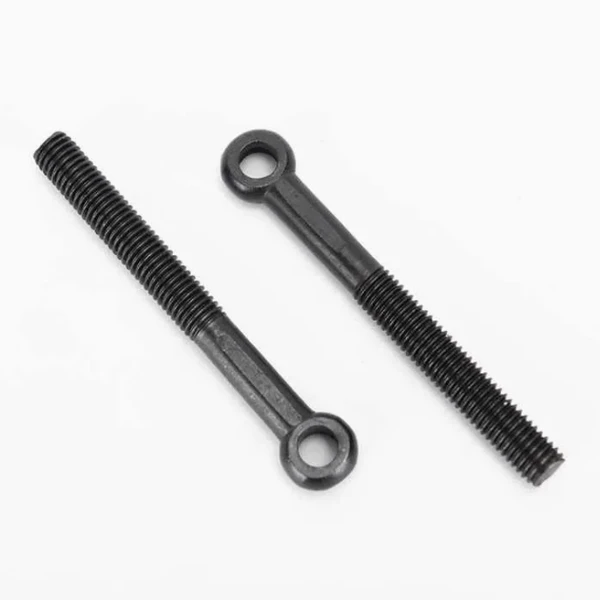
Technical Specifications of Steel Eye Bolt
| Parameter | Specification |
|---|---|
| Standard | DIN 444-2017 · ISO 3266 · ASME B18.15 |
| Available Grades | Grade 4.8 · 8.8 · 10.9 · 12.9 · SS304 / SS316 |
| Thread Sizes | M6 – M64 · 1/4″ – 2-1/2″ (UNC / UNF) |
| Types | Form A (Shoulderless) · Form B (Shoulder) |
| Safety Factor | 3:1 min · 5:1 available |
| Proof Load | 1.5 × WLL per ISO 3266 |
| Surface Finish | Zinc · HDG · Dacromet · Nickel · Black Oxide · Plain |
Working Load Limit (WLL) Guide - Straight Pull, Grade 8.8
| Thread Size | WLL 0° (kgs) | WLL 45° (kgs) | Wire Diameter (mm) | Application |
|---|---|---|---|---|
| M8 | 120 | 55 | 8 | Light equipment |
| M10 | 200 | 90 | 10 | Light industrial |
| M12 | 300 | 135 | 12 | General lifting |
| M16 | 550 | 245 | 16 | General lifting |
| M20 | 900 | 405 | 20 | Steel erection |
| M24 | 1,300 | 585 | 24 | Heavy rigging |
| M30 | 2,000 | 900 | 30 | Heavy rigging |
| M36 | 2,800 | 1,260 | 36 | Heavy lifting |
| M42 | 3,800 | 1,710 | 42 | Heavy lifting |
| M48 | 5,000 | 2,250 | 48 | Extra heavy |
Angular Load De-Rating Factors
| Load Angle | % of Straight-Pull WLL | Guidance |
|---|---|---|
| 0° (straight pull) | 100% | Only configuration for shoulderless (Form A) |
| 15° | 85% | Shoulder type recommended |
| 30° | 65% | Shoulder type recommended |
| 45° | 45% | Shoulder type only |
| 60° | 30% | Shoulder type only |
| 90° (shear) | - | Not recommended |
Material Grade Comparison
| Grade | Material | Tensile Strength (MPa) | Yield Strength (MPa) | Best For |
|---|---|---|---|---|
| 4.8 | Carbon steel | ≥ 420 | ≥ 340 | General-purpose, light loads |
| 8.8 | Carbon steel, hardened | ≥ 800 | ≥ 640 | Most common for lifting |
| 10.9 | Alloy steel (35CrMo) | ≥ 1,040 | ≥ 940 | Heavy-duty lifting |
| 12.9 | Alloy steel | ≥ 1,220 | ≥ 1,080 | Extreme load applications |
| SS304/316 | Stainless steel | ≥ 520 | ≥ 210 | Marine, food, chemical |
Surface Treatment Corrosion Comparison
| Finish | Salt-Spray Hours | Best Environment | Notes |
|---|---|---|---|
| Zinc Plated | 72–120 h | Indoor / mild outdoor | Cost-effective |
| Hot-Dip Galvanized | 1,500–2,000+ h | Outdoor / coastal | 10–20+ year life |
| Dacromet | 1,000+ h | Automotive / corrosive | No hydrogen embrittlement |
| Nickel Plated | 200–500 h | Appearance applications | Decorative |
| Stainless SS316 | - | Strongly corrosive / chemical | No coating needed |
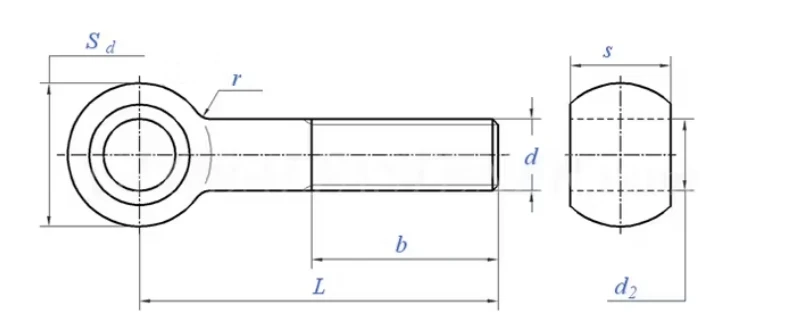
Key Advantages of Steel Eye Bolt
100% Proof-Load Tested
Every batch is verified to 1.5× WLL per ISO 3266. No defective eye bolt ever leaves the factory - test reports provided with shipment.
Complete WLL Data & Angle Factors
Full 0° / 45° / 90° angular load tables for every size and grade. Select the right bolt with data - never by guesswork.
Traceable Material System
MTC with heat number, chemical composition & mechanical properties per batch. Each bolt carries a batch number - full traceability from mill to project.
Professional Drop-Forging Know-How
Hot-drop-forged for continuous grain flow - 30%+ higher strength than welded or cast types around the eye and shoulder.
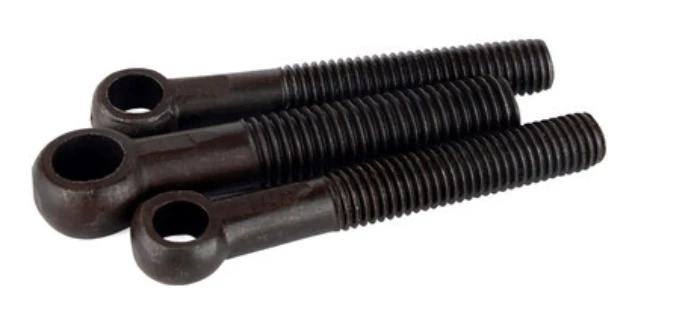
Applications of Steel Eye Bolt
1.Structural Steel Erection
Lifting and positioning steel columns, beams and trusses during site assembly on steel structure projects.
2.Structural Fabrication
Rotating and lifting fabricated assemblies in workshops, detailing and welding yards before dispatch.
3.Precast & Steel Components
Secure lifting points for precast panels, deck plates, purlins and other fabricated steel components.
4.Anchor & Tie-Down Points
Load anchoring, fall-arrest anchor points and safety tie-downs on steel construction sites.
Quality Control & Traceability
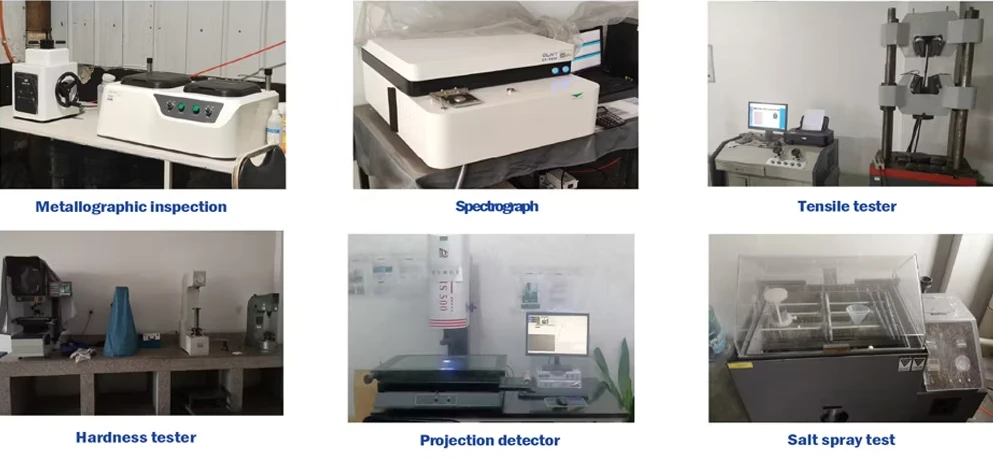
Our every batch is inspected, tested and traceable to the mill.Full production chain managed in-house: raw material inspection → hot drop-forging → heat treatment → thread rolling → surface finishing → proof-load testing → visual inspection → packaging.
Material Incoming
Chemical analysis & hardness check on coil/bar
Cutting
CNC shearing to exact blank weight
Hot Forging
Drop-forging for continuous grain flow.
Heat Treatment
Quench + temper to target grade
Thread Rolling
Cold-rolled for strength, precision-tolerance
Surface Finish
Zinc / HDG / Dacromet batch coating
Proof-Load Test
100% tensile test to 1.5× WLL
Final QC & Pack
Visual + dimensional check, batch tag
Quality Checks We Perform & Record
Load / Proof-Load Strength - every batch tensile-tested to 1.5× WLL, so the rated capacity is real, not just printed.
Material Chemistry - spectral analysis + hardness, confirming the grade you paid for is the grade you receive.
Internal Defects - magnetic-particle / ultrasonic inspection catches hidden cracks before they catch you.
Corrosion Protection - salt-spray testing + measured coating thickness, so outdoor life isn't just a promise on paper.
Dimensional & Thread Accuracy - CMM + thread gauges, so every bolt fits its base plate on the first try.
Traceability - heat number, batch number and MTC documented per shipment, so supplier audits are simple and fast.
How to Select the Right Eye Bolt?
A practical 5-step checklist our engineers use on every inquiry:
Step 1–3: Requirements
Load & angle - maximum lifted weight and the sharpest angle it will see.
Thread size - base-plate hole or tapped hole must match.
Environment - indoor, outdoor, coastal, or chemical → defines finish & grade.
Grade - 4.8/8.8 for most lifting; 10.9/12.9 for heavy or SS316 for corrosive.
Step 4–5: Verify & Order
Match against WLL chart - confirm straight-pull AND angle de-rated values
Demand proof - require MTC, batch number, and (if critical) 3rd-party report
Request a sample - physically test before committing to a bulk order
Send us size + grade + finish + load - we confirm your selection within 48 hours.
Packaging, Shipping & Lead Time
Packing Methods
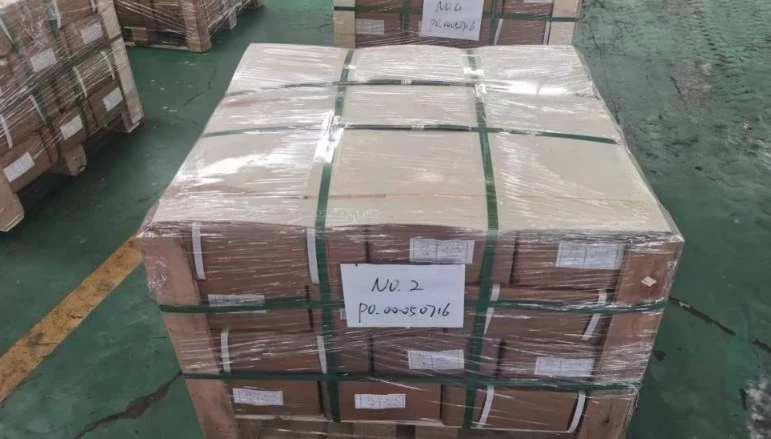
10–50 pcs → individual poly-bag + inner carton box.
Standard order → anti-rust oil / VCI paper, then carton or steel-palletized crate.
Bulk order → heat-shrink + steel pallets, protective corner guards.
Each container marked with size, grade, batch number for easy sorting on site.
Lead Time & Delivery
Standard sizes: 15–30 working days.
Custom / coated: 30–45 working days.
Samples: 7–10 working days (by express).
Weekly photo progress updates during production.
FAQ:
What is the safety factor for eye bolts?
The standard minimum safety factor for lifting eye bolts is 3:1 (breaking strength ≥ 3× WLL). For critical applications or where regulations require it, a 5:1 factor is available. All our eye bolts are proof-load tested to 1.5× WLL per ISO 3266 before leaving the factory.
Shoulder-type vs shoulderless eye bolt - what's the difference?
A shoulder-type (Form B) has a shoulder under the eye that resists bending when loaded at an angle, so it works for both straight and angular pulls. A shoulderless (Form A) has no shoulder and is only for straight in-line pulls - using it at an angle can cause bending failure. For most lifting and rigging, choose shoulder-type.
Can eye bolts be used for angled loads?
Shoulder-type eye bolts can handle angles, but the WLL must be de-rated: 0° = 100%, 15° = 85%, 30° = 65%, 45° = 45%, 60° = 30%. Loading at 90° (shear) is not recommended. Always keep the load in the plane of the eye. For frequent angular lifting, consider a swivel hoist ring instead.
Do you provide Mill Test Certificates (MTC)?
Yes. Every shipment includes an MTC per EN 10204 3.1 documenting material grade, chemical composition, mechanical properties, heat number and test results. Third-party inspection (SGS, BV, TÜV) is available at additional cost on request.
How should an eye bolt be installed correctly?
1) Ensure the tapped hole allows full thread engagement. 2) Hand-tighten, then snug with a wrench - do not over-torque. 3) Verify the shoulder seats fully against the surface (Form B). 4) Apply the load in the plane of the eye (straight pull only for Form A). 5) Inspect for cracks, wear, corrosion and deformation before every use - never reuse a damaged bolt.


