

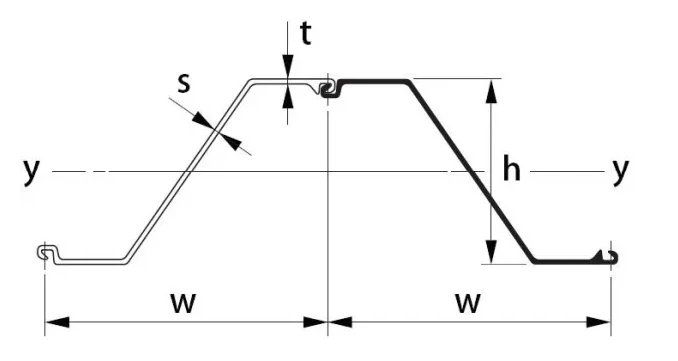
Z-shaped steel sheet piles are hot-rolled sheet pile sections with a zigzag profile and a formed interlock at each extreme outer edge of the section. The piles are driven in pairs; each end interlock engages an adjacent pair, closing the run into one continuous wall. They are widely used to build strong, high-strength retaining walls for flood control and coastal defense.
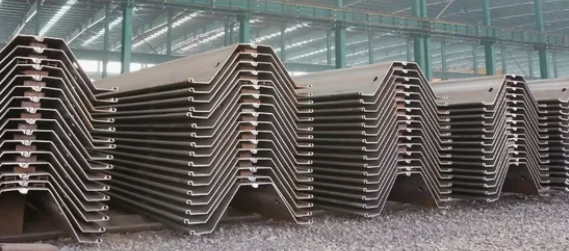
What Is a Z-Shaped Steel Sheet Pile?
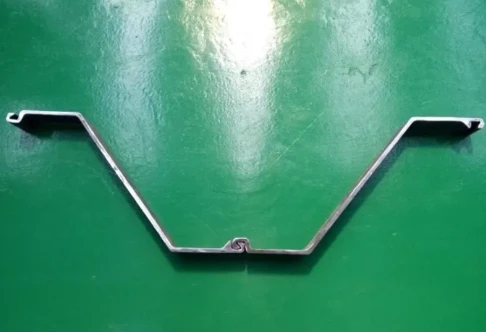
Z-shaped sheet piles are elongated structural steel sections with a Z-shaped cross-section whose edges interlock with one another, used to build continuous earth and rock retaining walls.
Key Features:
• Interlock location: the locking joints sit on the outer flanges, away from the neutral bending axis. This arrangement increases shear strength.
• High strength-to-weight ratio: the geometry delivers high bending resistance while using less material.
• Wide sections: the broad profile means fewer interlocks per meter of wall, speeding up installation and reducing potential leakage points.
Common Applications:
• Retaining walls and breakwaters
• Cofferdams for dry working areas
• Shoreline, port and marine protection
• Environmental barrier walls
Why Choose Z-type sheet piles for Flood Protection?
Carry the head with less steel. The Z-shaped deep web gives a higher section modulus, so the same flood head is carried by a wall lighter than an equivalent-capacity U-section.
Interlocks transmit thrust and seal the run. Interlocks at the outermost fibers tie the wall into one body; once sealed, it holds back the loaded head and keeps the protected land dry.
Supplied in cut lengths for fast driving. Z-sections can be driven quickly as a temporary dike crest ahead of a flood, or stand long-term as a permanent seawall or levee.
Reusable after temporary protection. A temporary cutoff wall is driven, then cleanly extracted and redeployed elsewhere, spreading the protection cost across events.
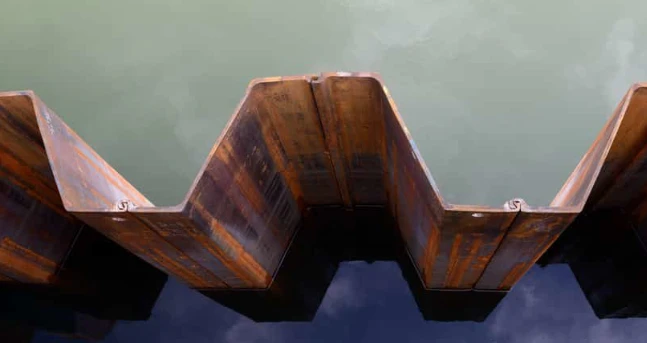
U-section steel sheet piles vs. Z-section steel sheet piles
| Property | U section | Z section |
|---|---|---|
| Section modulus per metre of wall | Lower for the same wall weight | Higher - carries a greater flood head |
| Interlock position | Between flanges, near the axis | At the extreme fibres, far from the axis |
| Watertightness under head | Sealed jointly with the closure | Sealed at the closure, holds head |
Types of Z-type sheet pile flood-control configurations
A Z-section may form the flood wall on its own, or add height to an existing embankment. The service configuration determines how the section is sized and driven:
| Form | Arrangement | How the Z section serves it |
|---|---|---|
| Free-standing flood wall | Vertical row on the water side, no backfill | Stands on its embedment against the head |
| Backfilled flood wall | Row with retained fill landward | Holds both the head and the retained fill |
| Levee raising | Row set into the crest of an existing dyke | Adds freeboard to the crest as a raised barrier |
Temporary and Permanent Z-type Sheet Pile Flood Protection
The same Z-section can be driven before a flood and extracted after it, or left in place for its design life. The two service modes differ in grade, corrosion allowance, coating and interlock treatment:
| Criterion | Temporary defence | Permanent flood wall |
|---|---|---|
| Service period | Set before the flood, extracted after | Driven to a design life in service |
| Grade | Standard grade sufficient for the head | Grade for the head plus long-life strength |
| Corrosion / coating | Minimal, protection for reuse | Corrosion allowance and a protective coating |
| Lock treatment | Sealed for the event, reopened on extraction | Permanently sealed to a service life |
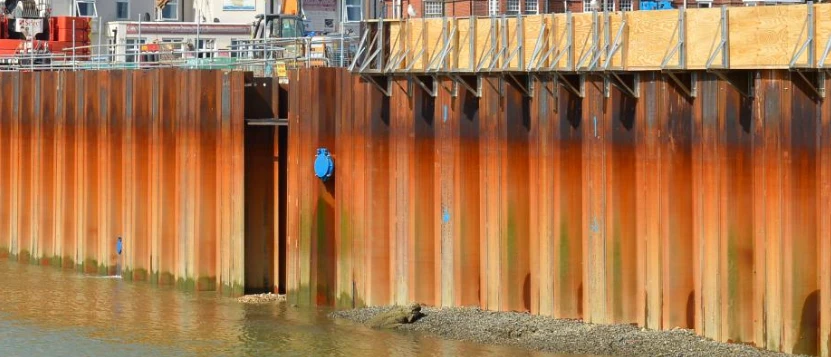
Steel Grades and Standards for the Z-Shaped Steel Sheet Pile
Z sections are rolled and supplied to a governing standard; the grade sets the design strength at which the section runs. Hot-rolled Z profiles are catalogued under EN 10248, JIS A 5528 or GB/T 20933:
| Standard | Rolling | Specimen grades |
|---|---|---|
| EN 10248-1 | Hot rolled | S235GP – S355GP – S390GP |
| JIS A 5528 | Hot rolled | SY295 – SY390 |
| GB/T 20933 | Hot rolled | Q355P – Q390P – Q460P |
How to Select the Right Z-Shaped Steel Sheet Pile Section?
Selection of the Z section is governed by the flood level, the crest elevation and the defence period, each of which sets a demand the section must satisfy:
| Flood parameter | Governing effect | Section response |
|---|---|---|
| Design flood level | Head of water on the wall | Establishes the required section modulus W |
| Pile length above and below grade | Free height above the crest and embedment below | Fixes the supplied length and the driving depth |
| Defence period | Temporary versus permanent service | Sets the grade, the corrosion allowance and the coating |
| Line of defence | Length of wall and number of crests | Fixes the quantity and the pacing of delivery |
| AZ section | Wall width (mm) | Section modulus (cm³/m) |
|---|---|---|
| AZ 13-770 | 770 | 1300 |
| AZ 18-770 | 770 | 1800 |
| AZ 26-700 | 700 | 2600 |
| AZ 28-750 | 750 | 2810 |
| AZ 48-700 | 700 | 4755 |
Note:a low crest or a shallow head is served by a light AZ section; a deep flood head or a permanent wall by a deeper section.
Construction of a Z-Shaped Steel Sheet Pile Flood Wall
Construction places the Z section along the line of defence to the design soil, corrects the line as it goes, and closes the joints before the wall is put to the head:
| Stage | Site operation | Control point |
|---|---|---|
| Set-out | Establish the line of defence to the flood level | Line, grade and crest elevation |
| Driving | Drive Z pairs lock-to-lock to the embedment depth | Verticality, lock closure, depth |
| Transition | Finish against structures, gates and crossings | Sealing and continuity at the transition |
| Put to head | Seal the interlocks and stand to water | Watertightness and crest clearance |

Conclusion
Z-type sheet piles defend against flooding with a vertical barrier: they carry the raised head and stay watertight under load - the higher section modulus carries the flood head with less steel, the interlocks tie the wall into one body and, once sealed, keep the protected land dry, and their cut lengths allow fast driving as a temporary dike crest or long-term standing as a permanent flood wall.
As your sheet pile supplier, we provide the Z-sections and pile lengths your line of defense requires, rolled to the applicable standard and supplied with mill certificates, with interlocks and corrosion protection matched to the head and service life; we also advise on section, grade, watertightness and crest elevation so the barrier is driven, sealed and ready to take the head on schedule. Send us your design flood level and embankment crest elevation, and our engineers will confirm the section and protection scheme for your line of defense.
Contact now to get Z-shaped steel sheet piles
FAQ:
What data must I provide to size a Z section for a flood defence?
Provide the design flood level, the crest elevation you require, the height of retaining line above and below grade, and whether the defence is temporary or permanent; these set the head, the section and the grade.
How high a flood level can a Z flood wall hold?
The limit is set by the section and length you choose, not by the profile itself - a deeper AZ section and a longer embedment hold a higher head; confirm the height against the computed moment and the standard's handbook.
How do the interlocks keep the wall watertight when put to head?
A sealed interlock closure is the primary barrier; a sealant or filler closes the residual path, and a welded closure removes it where the head is highest - the measures are re-sealed and inspected over the service life.
Do you advise on selection, watertightness and crest height?
Yes - we confirm the section and grade for your flood level, advise on the interlock seal for the head, and recommend the freeboard and crest for a temporary or permanent barrier.
How is supply, laid length and lead time arranged?
Section, grade, length, corrosion protection and port are fixed at enquiry; our engineers confirm a delivery schedule to your defence start date.