

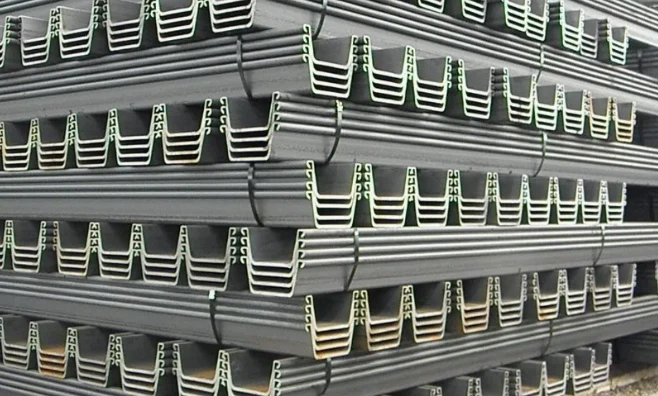
U-shaped sheet piles are hot-rolled steel profiles with a symmetrical U-shaped section that join through interlocking edges into a continuous wall that retains soil, resists water, and controls the direction of floodwater. For flood control they stand out because a watertight interlock forms a continuous, non-permeable barrier that holds water back and seals seepage, an extendable and heightenable wall lets a defence be raised and reinforced as the flood standard climbs, and temporary sections can be set, removed, and reused in an emergency.
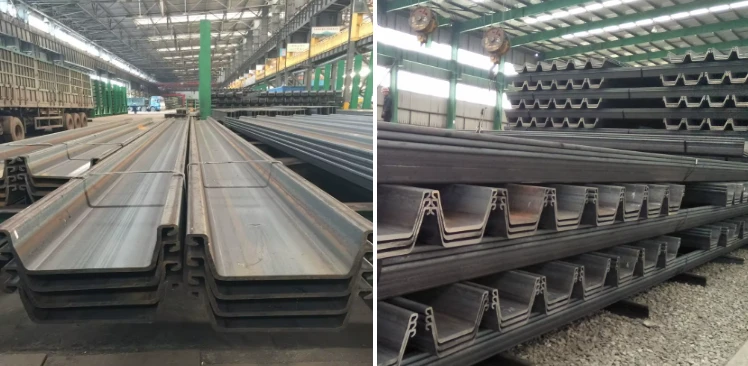
What Is a U-Type Steel Sheet Pile?
U-type steel sheet pile is a hot-rolled steel section with a symmetrical U-shaped profile. Each pile carries dedicated interlocks along its two vertical edges; adjacent piles are interlocked and driven one by one to form a continuous, near-watertight wall. Used in flood-control works, the following three properties are most critical:
Precise Watertight Interlocks. Tight milled interlocks connect adjacent piles into a continuous barrier that holds back floodwater on one face and blocks the seepage paths beneath the wall.
High Moment of Inertia and Section Modulus. The U-shaped section uses its stiffness to carry lateral earth and water pressure, allowing the wall to resist the thrust of rising floods and stabilize the riverbed and banks.
Extendable and Recoverable Pile Length. Pile lengths are combined to reach the design depth; the defense line can be raised and heightened, and temporary pile sections are pulled out and reused on site after the disaster.
U-type sheet piles are supplied to standards such as EN 10248, ASTM, or JIS A 5523, with steel grades covering S240GP, S355GP, A572 Gr.50, and A690, and can be designed under EN 1993-5 per the Eurocodes.
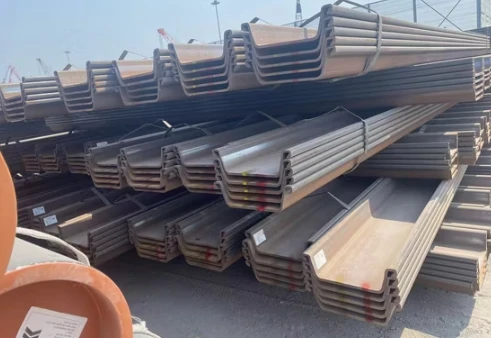
Functions of U-Type Steel Sheet Piles in Flood Control
A flood-control defense line is more than a wall holding back water - it determines how floodwater is blocked, raised against, and diverted away. U-type sheet piles perform four control functions:
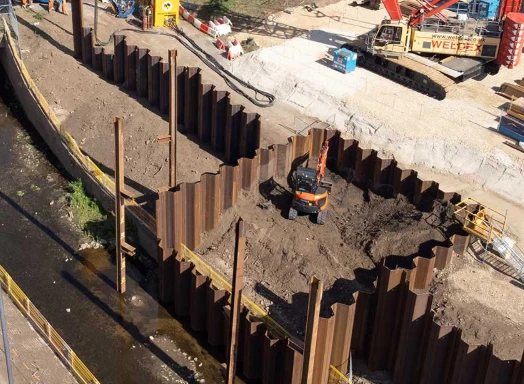
Water Blocking and Seepage Cutoff. The driven U-type pile wall forms a continuous barrier that holds back floodwater on one face while sealing the seepage paths beneath and along the wall, keeping the protected area dry throughout the flood event.
Raising and Reinforcing. When an existing levee no longer meets the design flood level, U-type piles are driven into the embankment body or its landward side to raise the crest and reinforce the slope without full reconstruction.
Temporary and Emergency Defense. As a removable structure, U-type piles are rapidly driven before the flood to hold water and pulled out for reuse after the peak passes - providing a standing response where permanent defenses are not yet built.
Diversion and Peak Attenuation. U-type guide walls safely channel floodwater into spillways or diversion channels and support flood-storage structures, guiding the flow rather than merely fighting it.
Applications of U-Type Steel Sheet Piles in Flood-Control Works
The functions above are realized through specific flood-control projects:
Levee Reinforcement - U-type piles are placed along the bank or the landward side of the embankment to reinforce the slope, seal seepage, and raise the crest to the design flood level.
Floodwall - where embankments are unsuitable (urban riverbanks, levees, and structures crossing floodplains), a continuous U-type pile wall resists the design flood level.
Emergency and Temporary Defense - U-type pile walls are rapidly set up ahead of an approaching flood and recovered afterward, bridging the gap until permanent defenses are completed.
Diversion and Flood-Storage Structures - U-type piles build diversion gates, guide walls, and retaining structures that channel floodwater into spillways, diversion channels, or flood-storage areas and hold it there.
Sea and Lake Dikes - where open water is adjacent, U-type pile walls stabilize banks and riverbed, seal seepage under storm surge and lake-level rise, and are assigned a corrosion allowance for permanent, submerged portions.
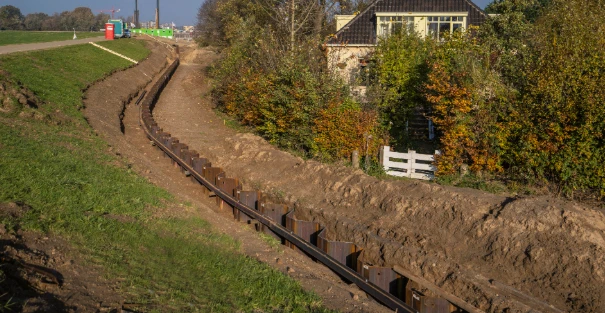
How the U-Shaped Steel Sheet Pile Is Deployed in Each Setting
Deployment follows the setting - the pile is configured so the barrier, the footing, and the seal act as one line.
Along a levee - piles are driven along the landward or the river side to add height and reinforce the slope, the cut-off tying the new crest to the existing bank.
As a free-standing flood wall - a continuous line is driven on its own where no levee exists, cantilevered or anchored, closing at its ends and at crossings to keep the line watertight.
In an emergency - shorter, quick-set sections are placed on the line of defence, held over the event, and driven out once the level has fallen.
At a diversion - guide walls are set to turn the flood into the spillway or storage, where the wall both retains and directs the flow.
Design of a U-Shaped Steel Sheet Pile Flood Control Wall
The wall is designed to carry the design flood level, the thrust it produces, and the seepage path beneath it for the full design life.
The design flood level and freeboard are set first, giving the crest height the wall must hold.
Earth and water pressure - the wall section and penetration are selected to carry the lateral thrust of the soil and the rising water, checked for bending and overall stability.
Seepage and piping control - the driven cut-off lengthens the seepage path under the wall; the penetration is set so the flow gradient stays below the point where soil boils, heaves, or pipes.
Scour protection - the base of the wall and, at the waterside, the bed are protected so the wash of the flood does not undermine the burial of the wall.
Primary and secondary lines - a permanent wall is designed for the design flood level, while a temporary or emergency line is sized to the event it must survive and is engineered to be set and recovered.
Steel Grades and Standards
Grades follow the wall duty: an uncoated permanent face below water carries a corrosion allowance or a marine grade, while temporary and emergency sections emphasise a well-working, retrievable interlock.
| Function / Duty | Representative Grades | Notes |
|---|---|---|
| Permanent flood wall | S240GP, S275GP, S355GP (EN 10248) | Design to EN 1993-5; freeboard for the permanent level |
| Submerged / marine face | A572 Gr. 50, A690 (ASTM), JIS A 5523 | Corrosion allowance or A690 seawater-resistant grade |
| Temporary / emergency | Standard interlock sections | Quick driving and clean retrieval emphasised |
Section, grade, and length are confirmed against the mill certificate to the standard the project specifies, with the bending, stability, and seepage-piping checks of the design.
Construction and Operation of U-Shaped Sheet Pile for Flood Control
Construction follows the line of defence; operation keeps the wall ready and sound through the years and the events it serves.
Piles are pitched and driven along the line with vibratory or press-in hammers, sealing the cut-off and closing the ends and intersections so the wall stays continuous and watertight.
For a heightening, the new piles are tied into the existing levee so the raised crest and the cut-off act as one defence.
In an emergency, quick-set sections are placed on the line ahead of the flood and recovered once the level has fallen, ready for the next event.
Through construction and into service, the wall is monitored for deformation and seepage, especially after a flood, so any settled or leaking section is attended before the next event.
Conclusion
Built on precise watertight interlocks and a stiff U-shaped section, and driven as a permanent wall, a raising section, or a recoverable emergency line, U-type steel sheet piles deliver a continuous wall for flood control that both blocks water and cuts off seepage.
If you are planning a U-type pile flood-control defense, send us your design flood level, wall length, soil and groundwater data, and the required execution standard - our engineers will recommend the right U-type steel grade and section for you.
Contact now to get U-Shaped Steel Sheet Pile
FAQ:
How high and how strong can a U-pile flood wall be?
The wall is designed to the design flood level plus freeboard, with a section and penetration that carry the thrust of the rising water and the retained soil. It can be cantilevered or anchored to hold a high crest, and heightened in place if the standard later rises.
Can a U-pile flood wall be temporary or moved?
Yes. A removable U-pile defence is driven quickly ahead of a flood, holds the water, and is then driven out and reused once the level falls. Permanent walls stay for the design life; an emergency line is sized to the event it must survive and engineered to be set and recovered.
Will the wall leak or cause seepage on the dry side?
The driven cut-off lengthens the seepage path beneath and beside the wall. Penetration is set so the flow gradient stays below the point of piping, heaving, or boiling, and the wall is monitored for seepage after floods and attended if any section develops.
What flood level should the wall be designed to?
The wall is set to the design flood level for the scheme plus freeboard, chosen by the authority for the return period the defence must serve. Heightening with U-piles can raise an existing defence if the standard is later increased.
What information is needed for a quotation?
Share the design flood level and freeboard, the wall length and required crest height, the soil and groundwater conditions, the design return period, the required standard (EN 10248, EN 1993-5, ASTM, or JIS), pile length and quantity, design life, and any coating or corrosion requirement. With these, an engineer can recommend the U-pile grade and section for the defence.