

U-type steel sheet piles are hot-rolled steel profiles with a symmetrical U-shaped cross-section that join through interlocking edges into a continuous wall that retains soil, resists water, and takes the action of flowing water and impact. For bridge pier protection they stand out because a watertight interlock seals flow and suppresses scour, a stiff section carries earth and impact pressure, and the piles can be driven underwater and recovered for reuse - forming lasting retention, scour, and collision defence around a pier.
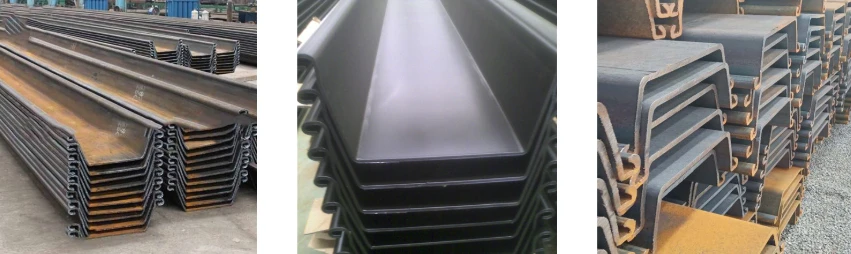
What Is a U-Type Steel Sheet Pile?
A U-type steel sheet pile is a hot-rolled steel profile with a symmetrical U-shaped cross-section. Each pile carries a dedicated interlock along both vertical edges; when adjacent piles are interlocked and driven, they close into a continuous wall. Three properties stand out for work in and beside water.
Watertight interlock. The close-fitting Larssen interlock joins adjacent piles into a continuous face that keeps soil in, forces flow around it, and holds water back.
High section modulus. The U-shaped section carries lateral earth and water pressure with stiffness, so the wall resists bending from flowing water and from the load of a striking body.
Versatile length and retrievability. Piles are furnished in lengths made up to suit depth, can be driven below the water table, and standard sections can be driven out and reused when the protection is temporary.
U-piles are manufactured in model series from about PU400×100 to PU600×215, and supplied to EN 10248, ASTM, or JIS A 5528 in grades from S275GP, S355GP, and SY295 to A328, A572 Gr. 50, and A690.
Why Choose U-Type Pile for Pier Protection?
Around a pier, two things attack it at once: the riverbed is scoured at the foundation, and a vessel, log, or ice floe can strike the shaft. The U-type pile answers both through the properties above.
Seals flow and suppresses scour. The watertight wall forces water to move around it and defends the bed, so the local scour that deepens around a pier base is held to a controlled depth.
Carries impact by stiffness. The stiff section and its fill absorb the energy of a striking body, so the pier shaft itself is spared the blow.
Both retaining and protective in one. The same wall retains soil around the pier base and protects the foundation and approach cone, so one system fills several jobs.
Installed underwater. The pile is driven through and below the waterline, so protection is placed around an existing in-service pier without a large dry work site.
Temporary works recoverable. Where a pier is built behind a shield, the piles are driven out and reused once the permanent works are sound.
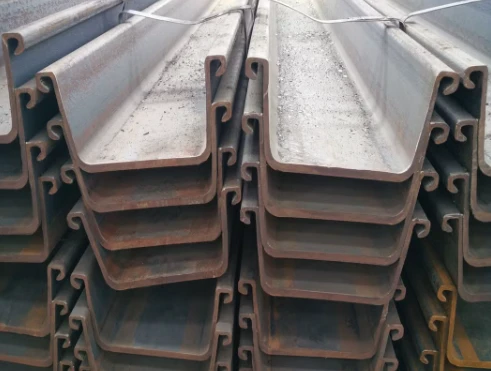
Applications of the U-Type Pile for Bridge Pier Protection

Scour-defence wall - forming an enclosure or guide wall around a pier, with an apron or riprap at the base where flow is diverted, to hold the deepened local scour away from the foundation.
Foundation retaining - retaining the soil around the pier base so the foundation is not exposed or undermined.
Collision protection - forming cellular islands, guide cells, or pile clusters that absorb a striking vessel, log, or ice floe before it hits the pier.
Approach-cone retention - holding the approach cone and abutment stable where the bank meets the bridge.
Point protection during works - a shielded pocket enclosing only the pier being built or repaired, then recovered once the works are sound.
Steel Grades and Section Selection for the Pier
| System | Representative Grades | Units / Naming Logic |
|---|---|---|
| EN 10248 | S275GP, S355GP, S430GP | Metric (MPa) - yield strength + GP |
| ASTM A328 / A572 / A690 | A328, A572 Gr. 50, A690 | Imperial (ksi) - specification + grade; A690 seawater-resistant |
| JIS A 5528 | SY295, SY390 | Metric (MPa) - yield strength + Y |
For a storage of permanent protection, the section is selected between about PU400×100 and PU600×215 to carry the moment of the wall under flood and impact, with length made up to reach the agreed scour depth. Section, grade, and length are confirmed against the mill certificate to the standard the project specifies.
Underwater Installation of U-Type Steel Sheet Piles
Because the pile is driven through water, protection is placed around an existing in-service pier while the bridge stays open:
Piles are pitched and guided around the pier with a frame so the wall follows the pier profile and stays plumb below the waterline.
Vibratory or press-in hammers drive U-piles quietly through the bed; impact hammers are used in stiff strata, and floating plant places the piles without a dry work site.
Interlocks are cleaned and lubricated before driving so joints slide and the ring stays continuous and watertight.
An apron or filter is placed at the base and the ring closed, then the bed is monitored after floods for scour and settlement.
Where the protection is temporary, extraction with a vibratory or press-in puller recovers the piles cleanly once the permanent works are sound.
Conclusion
U-type steel sheet piles bring a section with a watertight interlock that seals flow and suppresses scour, stiffness that carries earth and impact, a length that reaches below the bed, and a standard that is recoverable when the protection is temporary - properties that make them a dependable choice around a bridge pier.
If you are selecting a U-type pile for pier protection,please send your pier size and water depth, flood and collision data, and required standard, and our engineers will recommend the U-type grade and section.
Contact now to get U-type steel sheet piles
FAQ:
How much scour can a U-type pile protection resist?
The watertight wall forces flow around the pier and its apron protects the bed, so the deepened local scour is held to the design depth even in the design flood. Wall depth and apron are set for the design scour depth, so the extreme case is taken before it can reach the foundation.
Can the U-type pile stop a large vessel hitting the pier?
A cellular island, guide cell, or pile cluster is sized to absorb the design vessel's impact before the striker reaches the pier. The stiff section and its fill take the energy, or a cluster deforms plastically, keeping the pier shaft itself spared from the blow.
How are the piles driven underwater around a pier?
Piles are handled from floating plant and driven with vibratory or impact hammers through the water and into the bed, following a guide frame. No dry work site is needed, so protection is placed around an existing in-service pier while the bridge stays open.
Will the protection narrow the channel or reduce flow?
A well-designed wall deflects flow around the pier and can be set clear of the navigation channel, so it does not unduly narrow the waterway or redirect vessels onto other piers. Scour protection and flow conveyance are balanced in the design.
What information is needed for a quotation?
Share the pier size and water depth, the design flood velocity and discharge, the local scour and bed conditions, the design collision load (vessel, log, or ice) where relevant, the required standard (EN 10248, ASTM, or JIS), pile length and quantity, design life, and any coating or corrosion requirement. With these, an engineer can recommend the U-type grade and section for the pier.