

A welded steel box girder is a hollow, closed-section structural beam fabricated by welding steel plates together, characterized by top and bottom flange plates and vertical or inclined web plates. owing to its exceptional strength, superior torsional performance, and long-span capability, this structural beam is widely used in bridge construction.
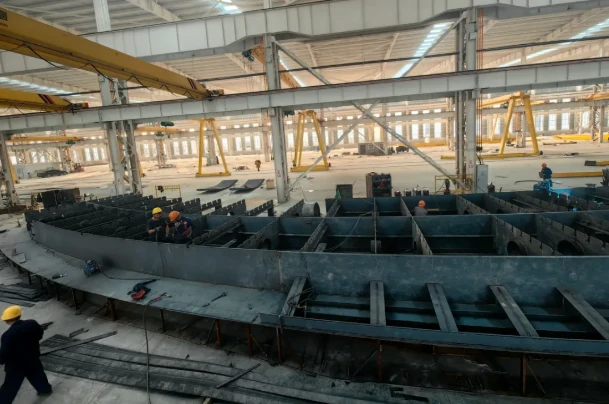
As a premier steel structure supplier, our fabrication expertise extends beyond high-quality welded steel box girders to a comprehensive suite of bridge components; we engineer and manufacture heavy-duty steel truss girders for long spans, orthotropic u-ribs for deck reinforcement, sidewalk cross girders for pedestrian pathways, as well as steel pipe piles for robust substructures and tie rods for structural equilibrium.
Specification of Built-up Steel Box Girder
| Girder Type | Single Box Girder / Multi-Box Girder |
| Span | 30 m – 200 m,or customized |
| Road Width | 8 m – 42 m, or customized |
| Material Grades | Q345qC/D/E, Q370qE, Q420qE, ASTM A709 Gr.50 / Gr.50W, EN 10025 S355J2 / S355NL, JIS SM490 |
| Load Capacity | Designed in compliance with AASHTO HL-93 load standard |
| Surface Treatment | Shot Blasting Sa 2.5,Zinc-rich primer, epoxy intermediate coat & polyurethane topcoat |
| Connection System | Bolt & nut fastener assemblies |
Struggling to match complex load standards like AASHTO HL-93 or customized road widths? [Inquire GNEE] for standard-compliant structural engineering parameters.
Main Components of a Box-shaped Steel Beam
A welded steel box girder is assembled from structural steel plates, forming a hollow, closed rectangular or trapezoidal section, primarily consisting of a top plate (deck plate), vertical or inclined web plates, and a bottom plate. these main plates are stiffened both internally and externally to resist heavy loads and torsional forces.
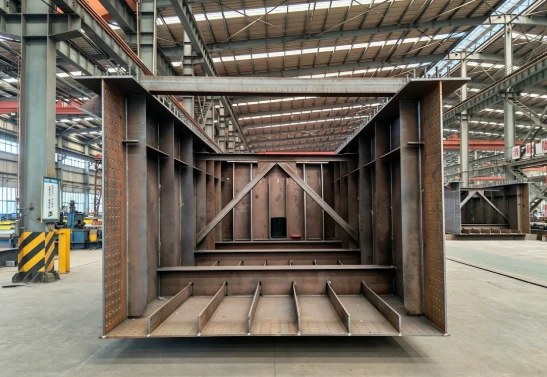
Top flange / Deck plate: Forms the upper horizontal surface, typically constructed as an orthotropic deck with longitudinal ribs to support direct traffic or applied loads.
Web plates: Vertical or inclined side walls connecting the top and bottom flanges, designed to resist high shear forces and bending loads.
Bottom flange: The lower horizontal plate that works in conjunction with the top deck to resist heavy bending forces under load.
Internal diaphragms: Solid or braced internal frames set at regular intervals to maintain box section stability and prevent cross-sectional distortion or warping.
Stiffeners and ribs: Small longitudinal and transverse steel strips welded to the main plates to prevent buckling of the thin steel panels.
Different Types of Steel Box Girder Beam for Bridge Construction
Based on the number of cells, steel box girders can be broadly classified into single-box single-cell, single-box multi-cell (e.g., single-box twin-cell, single-box triple-cell), and multi-box girder cross-section types.
Single-box single-cell steel box girders are commonly used for narrow-width bridges, short-to-medium-span highway bridges, urban interchanges, and pedestrian overpasses.
Single-box multi-cell steel box girders are commonly used for wide-width highway bridges, urban elevated expressways, and long-span continuous girder bridges and rigid-frame bridges.
Multi-box steel box girders are suitable for ultra-wide bridges, expressway mainline bridges, interchange ramp bridges, and extra-long-span bridges designed with separate upstream and downstream decks.


Confused about whether to choose single-cell or multi-cell box girders for your wide expressway or curved bridge project? [Talk to GNEE] to get the most cost-effective configuration recommendation.
Key Advantages of Box-shaped Steel Beam
Lightweight design
Compared with conventional concrete girders, the hollow section structure delivers equivalent compressive and flexural strength while reducing self-weight by more than 40%, thereby substantially lowering the load demands on substructure piers and foundations.
Superior flexural and torsional capacity
The hollow closed or open box section effectively distributes stresses, providing exceptionally high bending and torsional stiffness, making it highly suitable for curved bridges, cable-stayed bridges, and wide bridges with complex loading conditions.
Strong long-span adaptability
Standard applicable spans typically range from 50 to 200 meters, easily crossing rivers, seas, deep valleys, and complex urban interchange mainlines, meeting the requirement of long-span bridges for fewer piers.
Factory prefabrication and rapid assembly
Components are fabricated in the shop using high-precision automated welding. On-site assembly is fast with minimal wet work, reducing on-site construction duration by 30% to 50% and effectively minimizing disruption to urban traffic.

Main Applications of Welded Steel Box Girder
Bridges and highway construction
Long-span and curved bridges: Used in suspension, cable-stayed, and curved bridges, as their closed shape prevents distortion under asymmetric loading.
Expressway viaducts and interchanges: Suitable for crossing congested areas or deep valleys with a minimum number of intermediate piers.
Railway and pedestrian bridges: Provide a stable surface for high-speed trains and pedestrian passageways under limited clearance conditions.

Building and industrial structures
Large-span public buildings: Used as roof support structures for sports stadiums, convention and exhibition centers, and airport terminals.
Heavy industrial plants: Used as heavy-duty crane runway beams or long-span roof main girders, meeting high load-bearing capacity requirements.


How to Choose the Right Welded Steel Box Beam?
The selection of a welded steel box girder requires a comprehensive evaluation of structural performance, fabrication feasibility, and long-term durability. Engineers typically assess four key aspects - application scenario, loading conditions, structural configuration, and material properties - to ensure the steel box girder meets both engineering technical requirements and economic considerations.
Application scenario
The application scenario is the primary consideration in welded steel box girder selection, as design requirements vary significantly across different projects.
Bridge engineering: Key considerations include span length, traffic loading, fatigue performance, and torsional stiffness.
Building structures: Emphasis is placed on long-span support capacity, floor vibration control, and spatial utilization efficiency.
Crane structures: Structural stiffness, fatigue life, and fabrication accuracy are prioritized to withstand long-term repeated dynamic loading.
Structural dimensions and cross-section type
The structural dimensions and cross-section type of a steel box girder should be optimized based on span length, loading, and construction conditions. A single-box single-cell steel box girder is suitable for conventional projects, while multi-box multi-cell configurations offer higher torsional stiffness and are better suited for wide bridge decks, heavy loading, and long-span applications.

Design loads and structural performance
A steel box girder must be capable of safely resisting all loads throughout its service life, including dead loads, live loads, wind loads, seismic actions, and dynamic loads. These loads directly influence the steel box girder's load-bearing capacity, structural stiffness, deflection control, and fatigue performance.
Material selection and durability
Proper steel grade selection is critical to ensuring the strength, weldability, and long-term durability of a steel box girder. Commonly used materials include Q355B, S355, ASTM A572 Grade 50, and ASTM A709 Grade 50. For corrosive environments, corrosion protection measures such as epoxy coating, hot-dip galvanizing, or weathering steel should also be applied to extend the service life of the steel box girder.
Need help selecting the right welded steel box girder?
Our engineering team has extensive experience in steel bridge structures, building steelwork, and crane girders. Simply share your project drawings or technical requirements, and we'll recommend the most suitable box girder configuration, material, and fabrication solution.
Request your customized solution today
Manufacturing Process of Our Welded Box-shaped Steel Beam
Our factory implements full in-house fabrication for welded steel box girders, covering all production links from raw steel plate cutting to finished coated box girders. Every processing step follows international bridge steel standards (EN, AISC, GB), with strict dimensional tolerance control and full penetration welding requirements to meet long-span bridge, overhead viaduct and heavy industrial load demands.

1. Plate Cutting & Component Machining
High-strength steel plates are cut into top/bottom panels, webs, diaphragms and stiffeners via CNC equipment. Matching splicing notches and weld grooves are pre-processed for easier assembly.
2. Groove Milling & Main Welding
Plate edges are milled to form penetration weld grooves. Long primary seams are mostly completed by automatic submerged arc welding for stable weld formation; manual welding may be used for intricate joints.
3. Integral Assembly & Tack Welding
All machined components are positioned on dedicated assembly jigs. Structural flatness, verticality and internal spacing are calibrated before temporary tack welding to control dimensional deviation.
4. Shot Blasting, Coating & Finished Girder
Post-weld straightening and full dimension inspection are carried out first. Then workpieces are shot blasted to Sa2.5 grade and coated with anti-corrosion primer. Completed single/twin-cell box girder segments can be pre-assembled in factory before delivery.
Afraid that overseas welding defects might delay your on-site assembly and bridge construction timeline? [Talk to GNEE] to review our zero-defect NDT quality assurance reports.
Why Choose Our Box-shaped Steel Beam?
1.Engineering Expertise and Custom Design
Every project has different structural requirements. Our engineering team can provide customized welded steel box girder solutions based on your project drawings, loading conditions, design specifications, and installation requirements. Whether for bridge engineering, building steel structures, or crane systems, we optimize the structural design, fabrication process, and overall cost-efficiency to match actual working conditions.
2.Precision Manufacturing and Quality Assurance
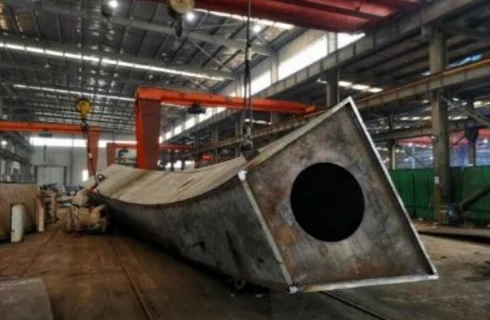
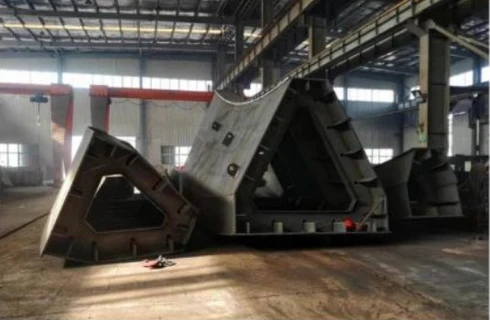
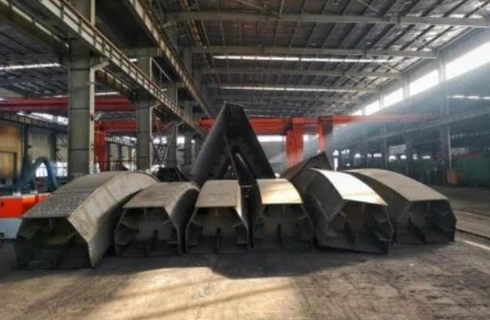
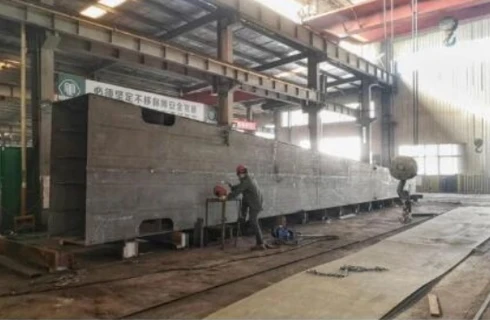
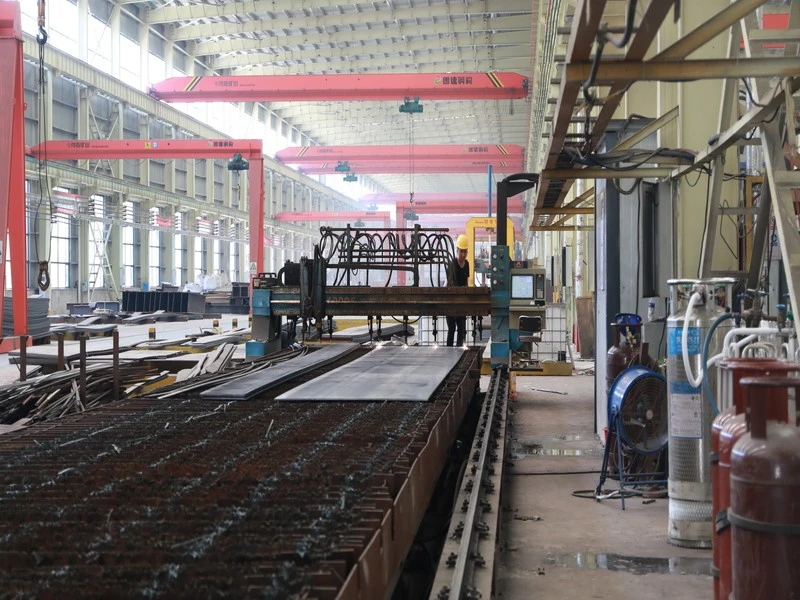
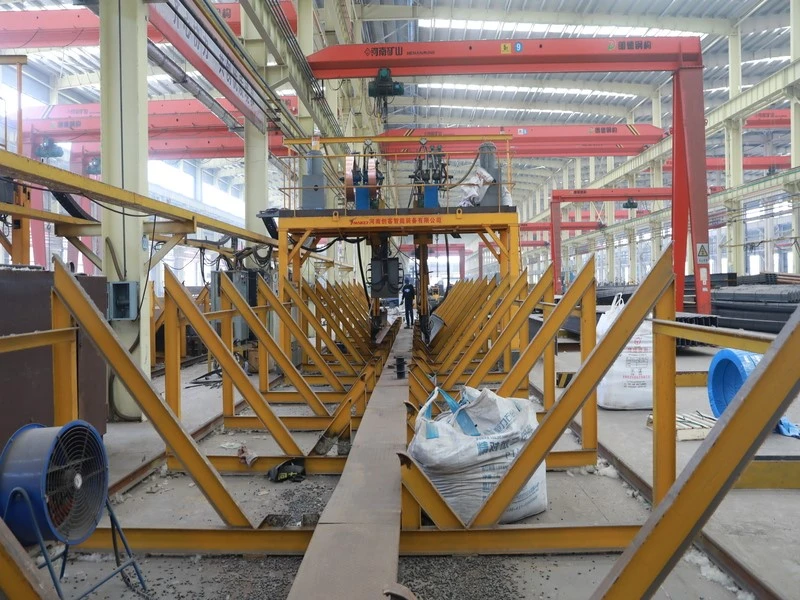
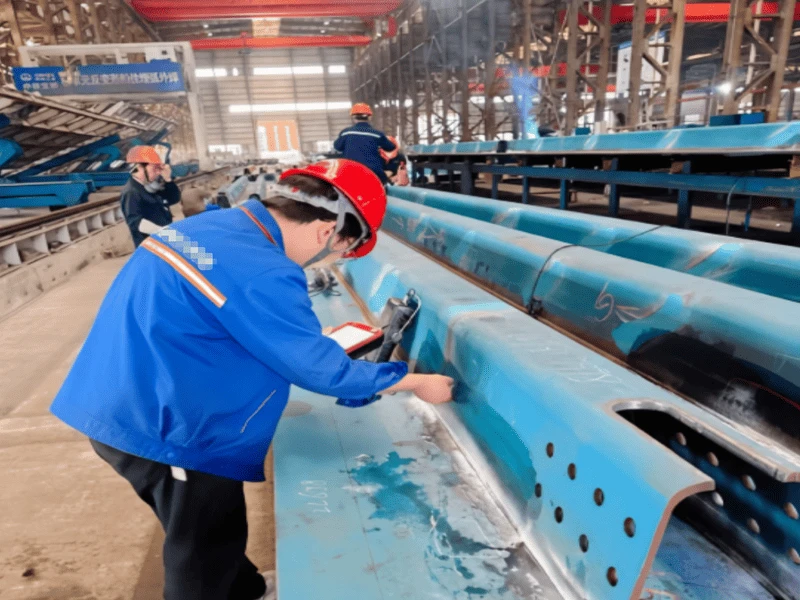
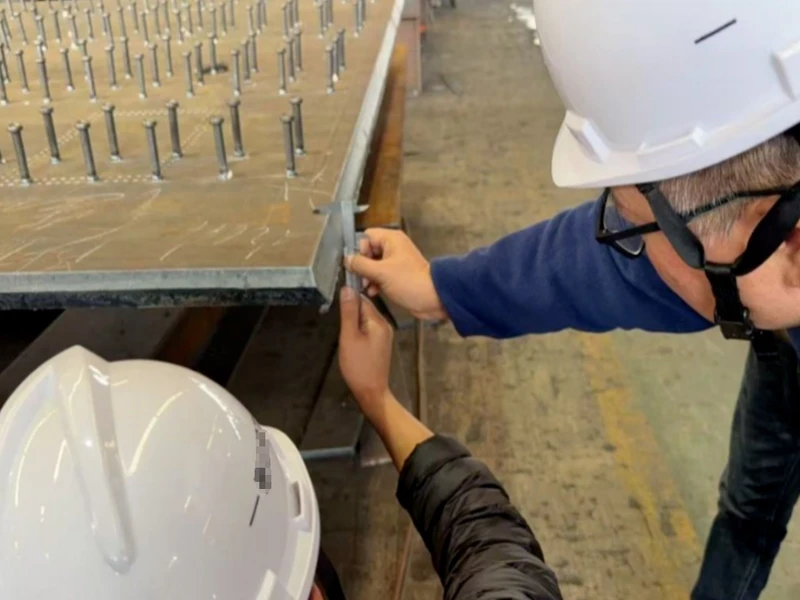
Our welded steel box girders are fabricated using advanced manufacturing processes including CNC cutting, automated welding, dimensional inspection, and NDT, supported by full-process quality control to ensure dimensional accuracy, weld quality, and structural performance meet project requirements.
3.International Standards and Export Experience
Our welded steel box girders can be designed and fabricated in accordance with AWS, EN, AISC, and client-specified standards. With extensive international project experience, we are well-versed in export documentation, third-party inspection, packaging and shipping, and international logistics requirements, effectively ensuring smooth project delivery.
The table below lists the key international bridge design standards we follow, including their scope of application and core requirements:
|
International Design Standard |
Issuing Organization |
Scope of Application |
Core Requirements |
|
AASHTO LRFD Bridge Design Specifications |
American Association of State Highway and Transportation Officials |
Highway bridges in the United States, Canada and other North American countries; widely recognized in global export projects |
Adopts load and resistance factor design method; strictly regulates material performance, load calculation, welding quality and durability design; emphasizes seismic and wind resistance performance |
|
Eurocode 3 (EN 1993) |
European Committee for Standardization (CEN) |
Steel structure bridges in EU member states and European countries; applicable to various steel bridge types including steel box girders |
Unified technical rules for steel structure design; focuses on structural stability, fatigue resistance and environmental adaptability; specifies strict requirements for welding processes and material selection |
|
Canadian Highway Bridge Design Code (CHBDC) |
Canadian Standards Association (CSA) |
Highway bridges in Canada; suitable for cold and harsh environmental conditions |
Covers fixed and movable highway bridge design, evaluation and rehabilitation; emphasizes design considerations for extreme weather such as freeze-thaw cycles; strict requirements for structural durability |
|
Japanese Design Specifications of Highway Bridges |
Japan Road Association (JRA) |
Highway bridges in Japan; applicable to seismic-prone areas |
High requirements for seismic performance; strict regulations on structural deformation control and material durability; detailed provisions on welding quality and anti-corrosion treatment |
|
Australian Bridge Design Code (AS 5100) |
Standards Australia (SA) |
Highway and railway bridges in Australia; suitable for marine and subtropical environments |
Focuses on corrosion resistance in marine environments; specifies requirements for steel material performance, welding processes and structural fatigue resistance; strict quality control standards for prefabricated components |
|
GB 50017-2017 (Chinese National Standard) |
Standardization Administration of China (SAC) |
Steel structure bridges in China; can be used as a reference for export projects to Southeast Asia and other regions |
Regulates the design, construction and quality inspection of steel structures; specifies requirements for material performance, welding quality, structural stability and durability; compatible with international standards in many aspects |
4.End-to-End Project Support
Our services extend beyond product manufacturing to include technical consulting, drawing review, fabrication optimization, packaging recommendations, logistics coordination, and after-sales technical support, providing clients with full-process services from design planning to project delivery.

Packing & Delivery of Our Welded Steel Box Girder Beam
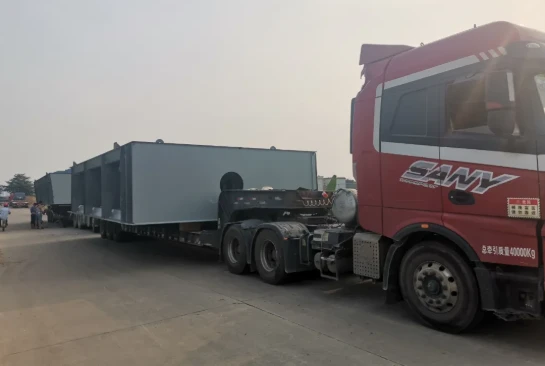
Partial disassembly: Divided into manageable modular transport segments with clearly marked splice locations to accommodate highway or railway restrictions.
Surface treatment: Sealed with anti-rust primer and blast-cleaned (Sa 2½ standard) to prevent corrosion.
Moisture protection: Wrapped with a double-layer waterproof membrane and equipped with desiccants or breathable membrane to ensure moisture protection during transport.
Impact protection: Edges and corners reinforced with foam padding, timber framing, and shock-absorbing pads.
Contact us to get welded steel box girder
FAQ:
What is the difference between box girder and I beam?
Compared to an I-beam, the advantage of a box girder is that it better resists torsion. Having multiple vertical webs, it can also carry more load than an I-beam of equal height (although it will use more material than a taller I-beam of equivalent capacity).
Is a box girder bridge a beam bridge?
The box is typically rectangular or trapezoidal in cross-section. Box girder bridges are commonly used for highway flyovers and for modern elevated structures of light rail transport. Although the box girder bridge is normally a form of beam bridge, box girders may also be used on cable-stayed and other bridges.
What is the maximum length of a box girder?
A box girder is defined as a structural element, typically rectangular or trapezoidal in shape, that possesses high torsional resistance and is used for spans of 20–150 m.