


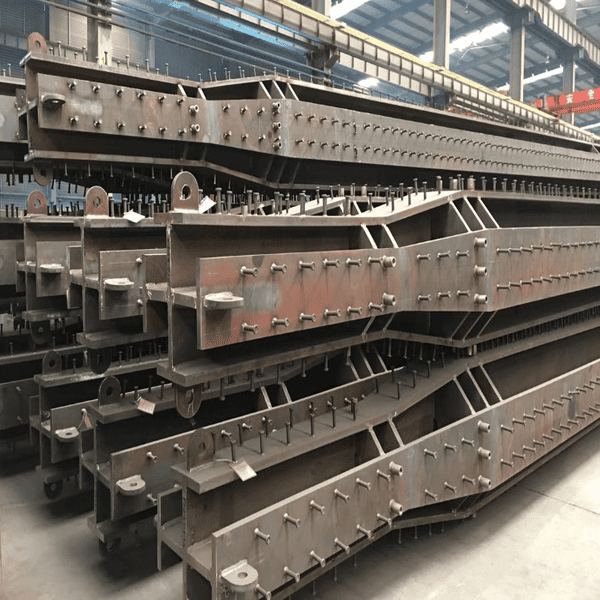
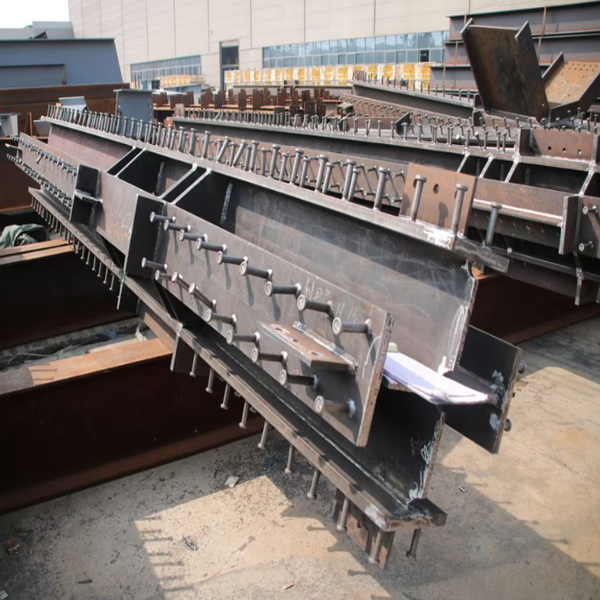
GNEE specializes in the precision fabrication of cross shaped steel columns, a critical component for high-rise buildings and heavy industrial structures. Engineered for superior axial compression resistance and multi-directional stability, our cross columns are manufactured using the advanced "H+2T" assembly method. This ensures a symmetrical cross-section and maximum structural integrity, making them the ideal choice for core support in complex steel frameworks.

Specification of Cross Shaped Steel Columns
| Description | Cross Shaped Steel Column |
| Material | Q235B, Q355B/C/D/E, Q420B; ASTM A36, A572 Gr.50; EN10025 S355JR |
| Standard | GB/T 1591, ASTM A6, EN 10025, AISC 360, AWS D1.1 |
| Metal Processing | CNC Flame/Plasma Cutting, Submerged Arc Welding (SAW), End Face Milling, NDT (UT/MT) |
| Certification | ISO 9001:2015, CE (EN 1090), AWS D1.1 Welder Qualification, SGS/BV Inspection |
| Application | High-rise Buildings, Airport Terminals, Convention Centers, Industrial Plants, Bridge Piers |
| Machining precision | Length: ±2.0mm; Sectional Dimension: ±2.0mm; Straightness: 1/1000 |
| Surface treatment | Shot Blasting Sa2.5, Epoxy Zinc-rich Primer, Fluorocarbon Coating, or Hot-dip Galvanizing |
| Mode of transport: | Sea Freight |
| Service | Custom Fabrication based on Shop Drawings; OEM/ODM |
| Packing details | Standard package/Pallet or Container/As per customized specifications |
| MOQ | Customizable based on project scale |
Advantages of Cross Shaped Steel Columns
1. Dual-Axis Stability
Dual-axis symmetry ensures balanced strength in both directions, effectively eliminating the "weak axis" inherent in standard H-beams. This geometric uniformity significantly optimizes structural stability and buckling resistance under complex multi-directional loads.
2. Superior SRC Integration
The open-profile design maximizes mechanical interlocking and concrete confinement in Steel Reinforced Concrete (SRC) systems. It facilitates high-density concrete pouring by eliminating the air pocket issues common in closed sections, thereby maximizing composite load capacity.
3. High Seismic Ductility
The cross shaped steel columns exhibit exceptional seismic resilience through stable plastic hinge formation. Their geometry simplifies orthogonal beam-to-column connections, which reduces welding congestion and lowers the risk of brittle fracture compared to box sections during seismic events.
4. Spatial & Construction Efficiency
The cross shaped steel columns occupy significantly less floor space than traditional reinforced concrete columns for the same load. The accessible design simplifies four-way beam connections and non-destructive testing (NDT), reducing factory fabrication labor and overall costs by 15–20%.


Production Process of Cross Shaped Steel Columns
1. Precision CNC Cutting
Steel plates are cut using CNC flame technology to ensure clean edges and accurate dimensions for the components.
2. Core H-Beam Fabrication
Assemble and weld the primary H-beam, which serves as the structural core of the cruciform section.
3. T-Section Splitting
A secondary H-beam is longitudinally split along its web center to create two perfectly symmetrical T-sections.
4. Final Cross Assembly
Following the formula "1 H-beam + 2 T-beams", the T-sections are symmetrically welded to both sides of the core web.
5. Adjustment & Inspection
Perform mechanical straightening to eliminate thermal deformation and conduct NDT to ensure weld integrity,, followed by shot blasting and coating for anti-corrosion.


The Role of Shear Studs in Cross Shaped Steel Columns
While our cruciform steel columns are fabricated strictly to your design specifications, GNEE offers the integration of shear studs (also known as headed weld studs) to significantly enhance structural performance, especially in steel-concrete composite structures.It will bring the following benefits:
Enhanced Composite Bonding
Creates a permanent mechanical bond between the steel core and concrete, ensuring they work as a unified unit to significantly increase the column's total load capacity.
Superior Shear & Seismic Resistance
Acts as mechanical "pins" to prevent sliding between materials, providing critical stability against lateral shear forces caused by wind or earthquakes.

Applications of Cross Shaped Steel Columns
Multi-story Buildings: Widely used as load-bearing walls and main supports for multi-story residences and commercial complex projects.
Bridge Projects: Applied as supporting members for bridge piers thanks to reliable seismic performance and efficient field installation.
High-rise Buildings: Primary vertical & horizontal load-bearing components for high-rise structural systems.
Industrial Workshops: Prefabricated cross columns speed up on-site erection to shorten construction schedule for factory projects.
Underground Parking Lots: Delivers stable structural support against intensive vertical and lateral loads to guarantee underground garage safety.

Packing & Delivery of Cross Shaped Steel Columns
1. Structural Reinforcement
Heavy steel frames or specialized wood padding are used to prevent bending or deformation of the cross-sections during transit.
2. Coating Protection
Bubble wrap or industrial padding is applied to contact points to protect the paint or galvanized finish from scratches.
3. Secure Lashing
High-strength steel straps and lashing systems secure the columns to prevent shifting or collision during ocean voyages.


